One useful action
Bring everyday things.
Our vision
The race toward humanoid robots asks an exciting question: how much of human work can a machine eventually reproduce? FETCH begins with a smaller one: what is the least machine we can build that makes everyday life meaningfully easier?
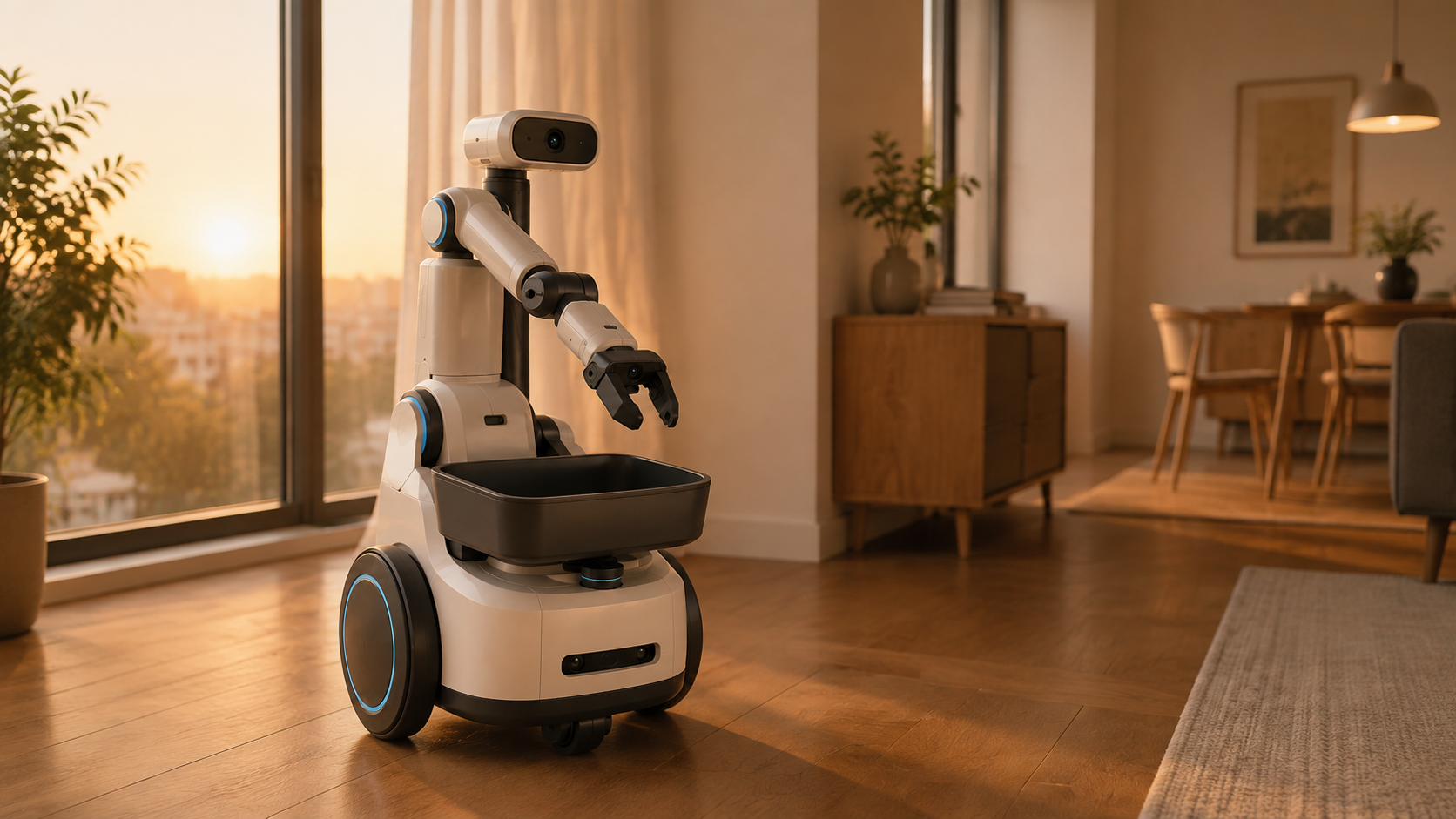
Every motor, sensor and feature adds complexity. FETCH is an experiment in subtraction — removing capabilities until what remains is small enough, affordable enough and useful enough to belong in an ordinary home.
A different path
The future we are interested in remains modular and appliance-like — not a humanoid transformation.
Bring everyday things.
Understand more objects and more homes.
Multiple simple robots or accessories can eventually work together.
Only when usefulness and reliability justify it.
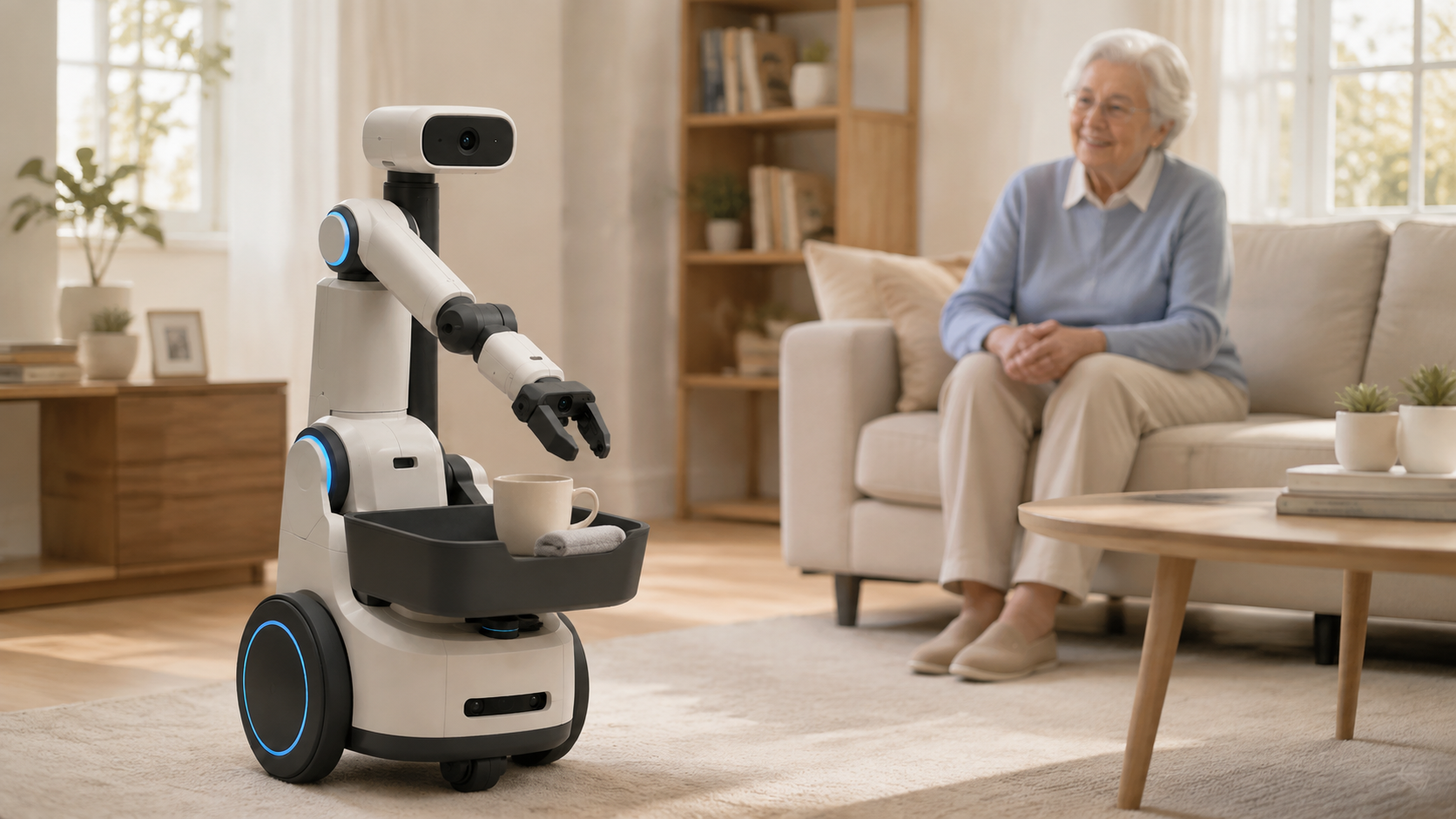
FETCH is being designed for people who value independence — whether movement has become harder with age, mobility is temporarily limited, or a little physical help simply makes home life easier.
Price as a design constraint
~$999
Target price: ~$999
Affordability is not an afterthought. It is part of the research. We are deliberately limiting the first product so that home robotics can move closer to consumer-electronics economics.
Target only. Final product specifications, availability and pricing may change.
My glasses
Small help. More independence.