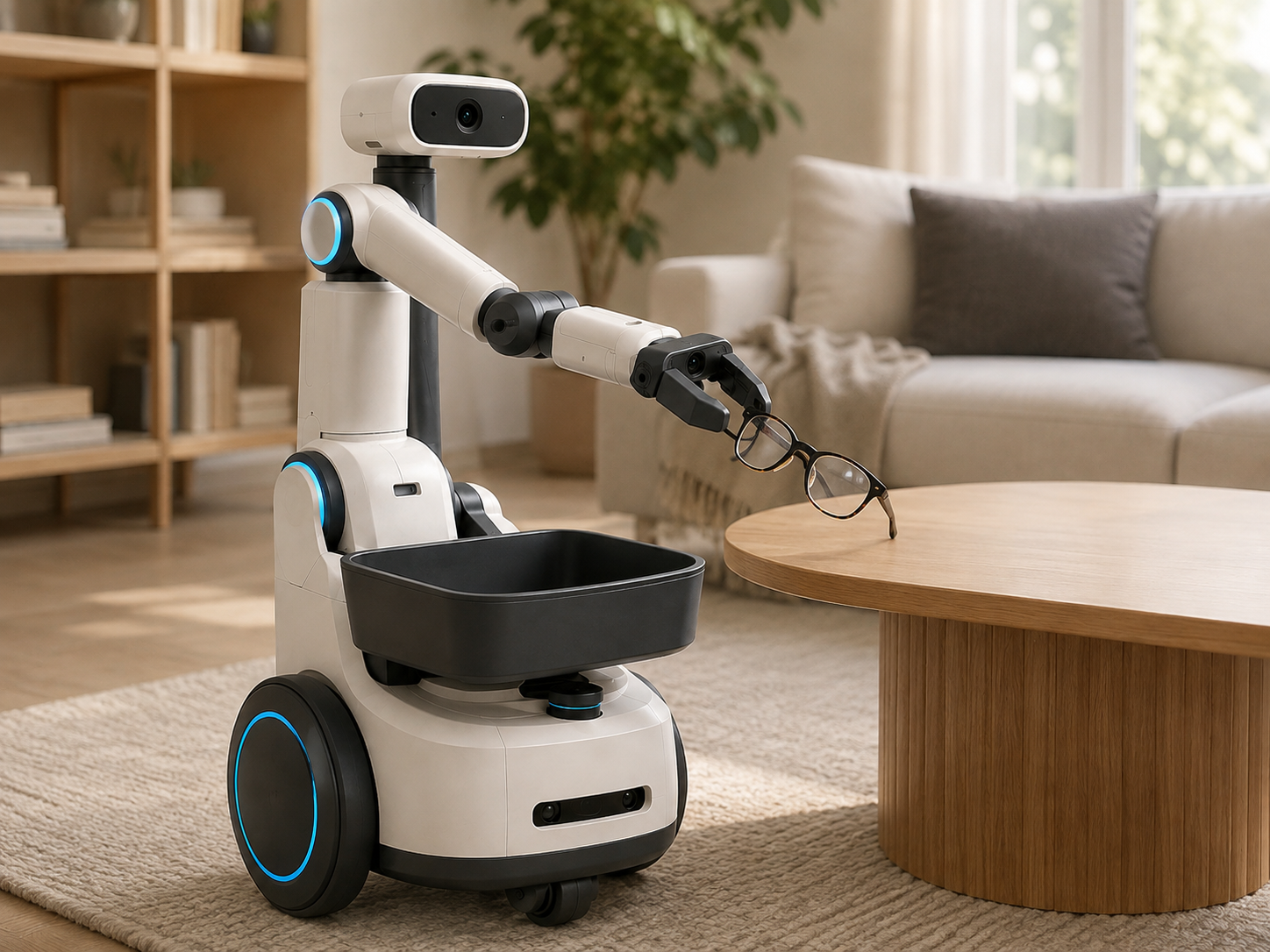
Use case 01 — Glasses
“Where did I leave my glasses?”
A familiar object, a familiar place, and one less unnecessary trip across the room.
Everyday help
FETCH is not being designed around spectacular robot demos. We are starting with small, repeated tasks that can have surprisingly large value.
Use case 01 — Glasses
A familiar object, a familiar place, and one less unnecessary trip across the room.
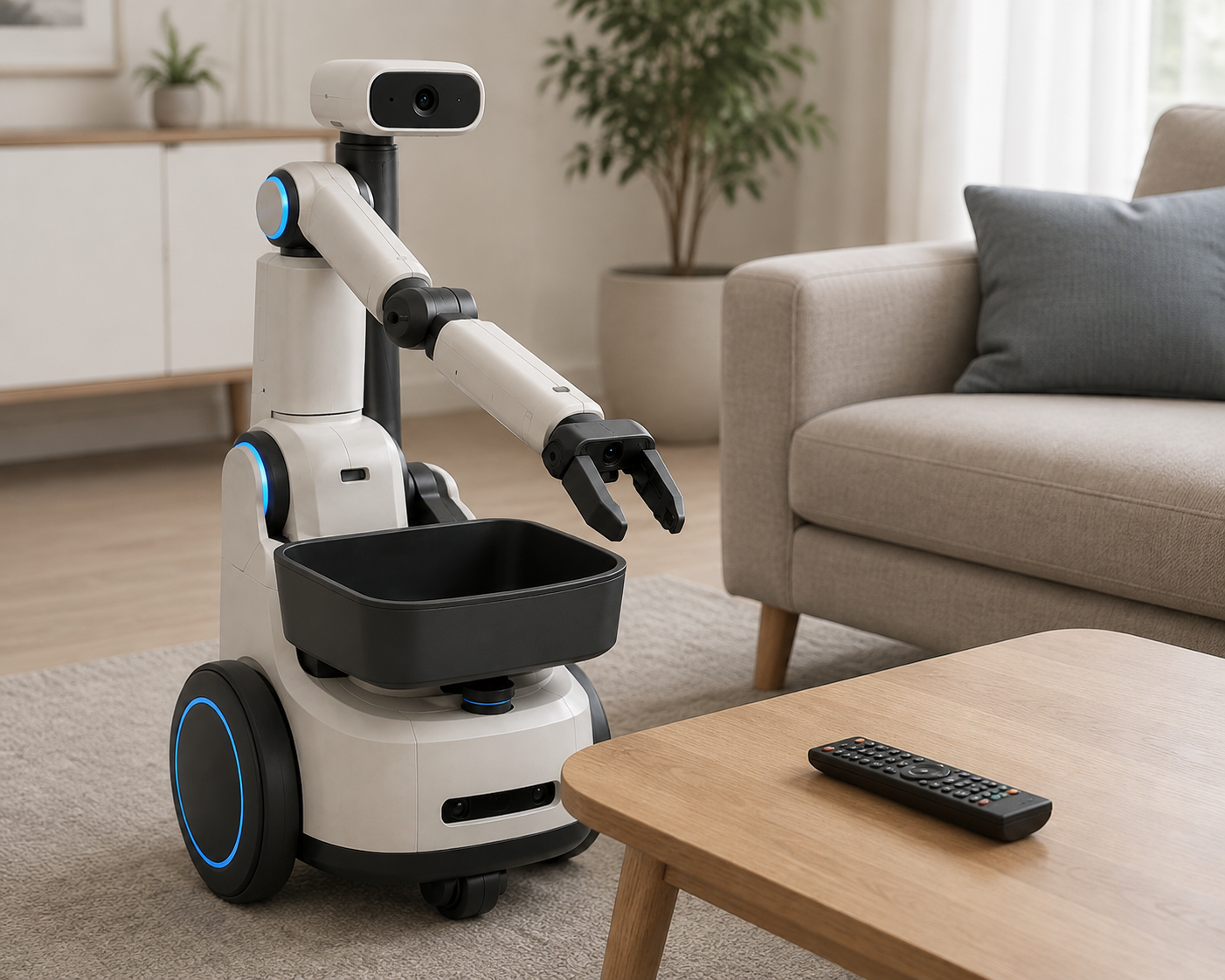
Use case 02 — TV remote
Ask FETCH to retrieve it from the coffee table, sofa area or another remembered location.
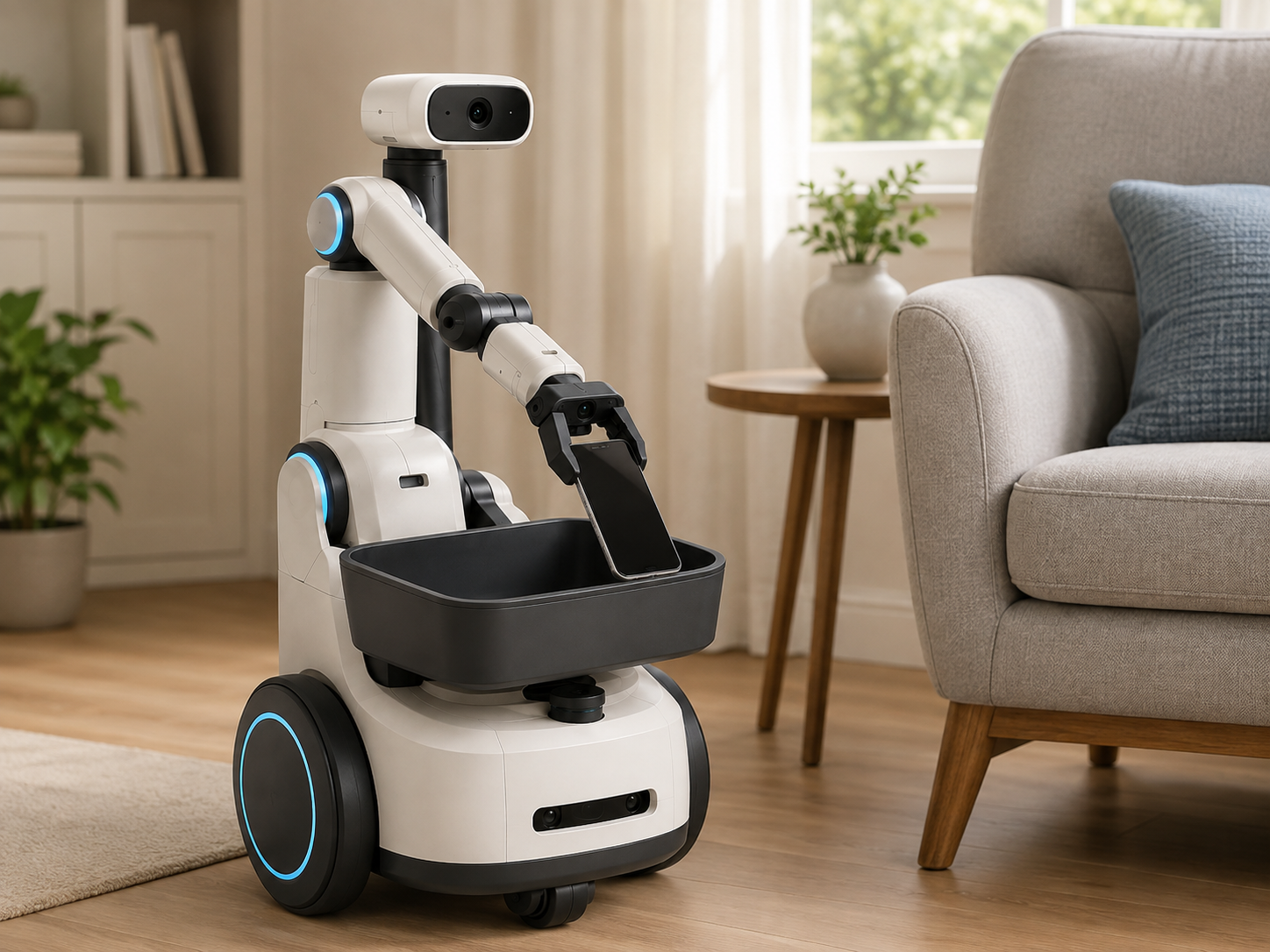
Use case 03 — Phone
FETCH can be developed to locate a familiar phone and bring it back in its tray.
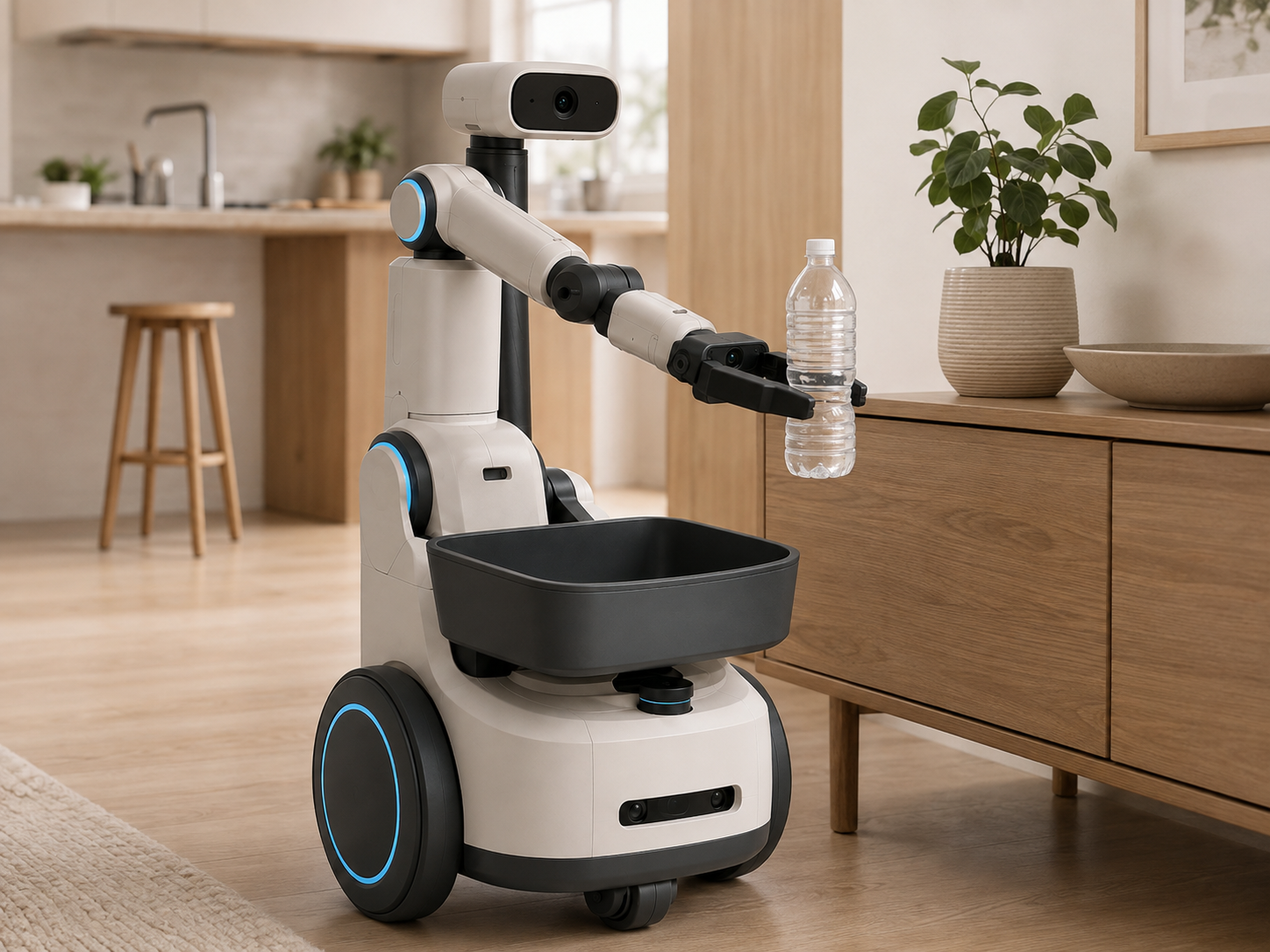
Use case 04 — Water
Our initial research includes transporting closed, lightweight drink containers from accessible locations.
Research candidates
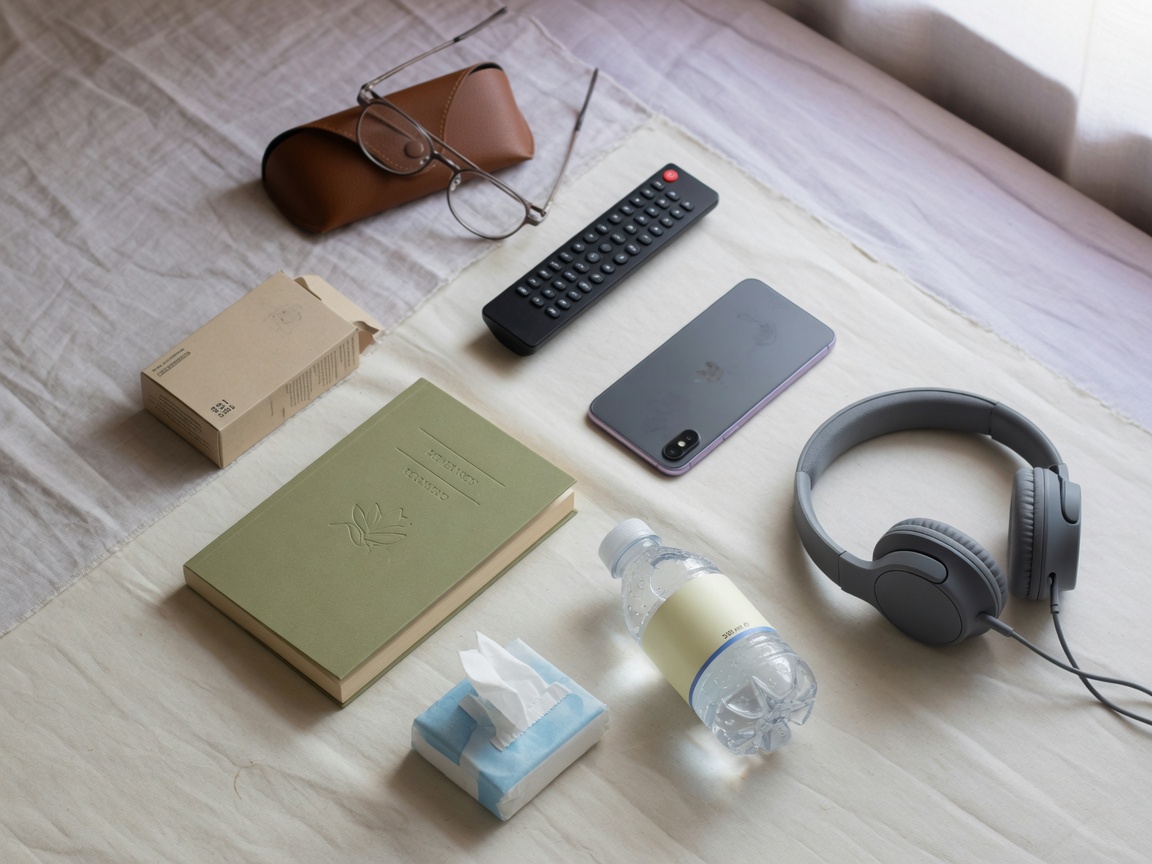
Beyond the first four tasks, we are listening for other lightweight objects that people would actually ask for.
A pack from a table or shelf.
A closed box from a remembered place.
A paperback left in another room.
A small, familiar personal object.
A cable and brick within reach of the tray.
Things that are useful, light and safe to carry.
Illustrative research hypothesis
FETCH intentionally chooses the simple, frequent corner first — tasks that happen often, and that ask a person to get up, search, or reach.
Illustrative product-research model. Actual priorities will be validated through user studies.
A path, not a promise. Each stage depends on the last one becoming reliable enough to live with.
Lightweight retrieval
More objects and more surfaces
Broader household assistance