01 Frequency
Frequency
Which small retrieval tasks happen often enough to matter?
FETCH Research
Home robotics often begins with the machine: more joints, more intelligence, more impressive demonstrations. We are starting somewhere else — with the everyday task.
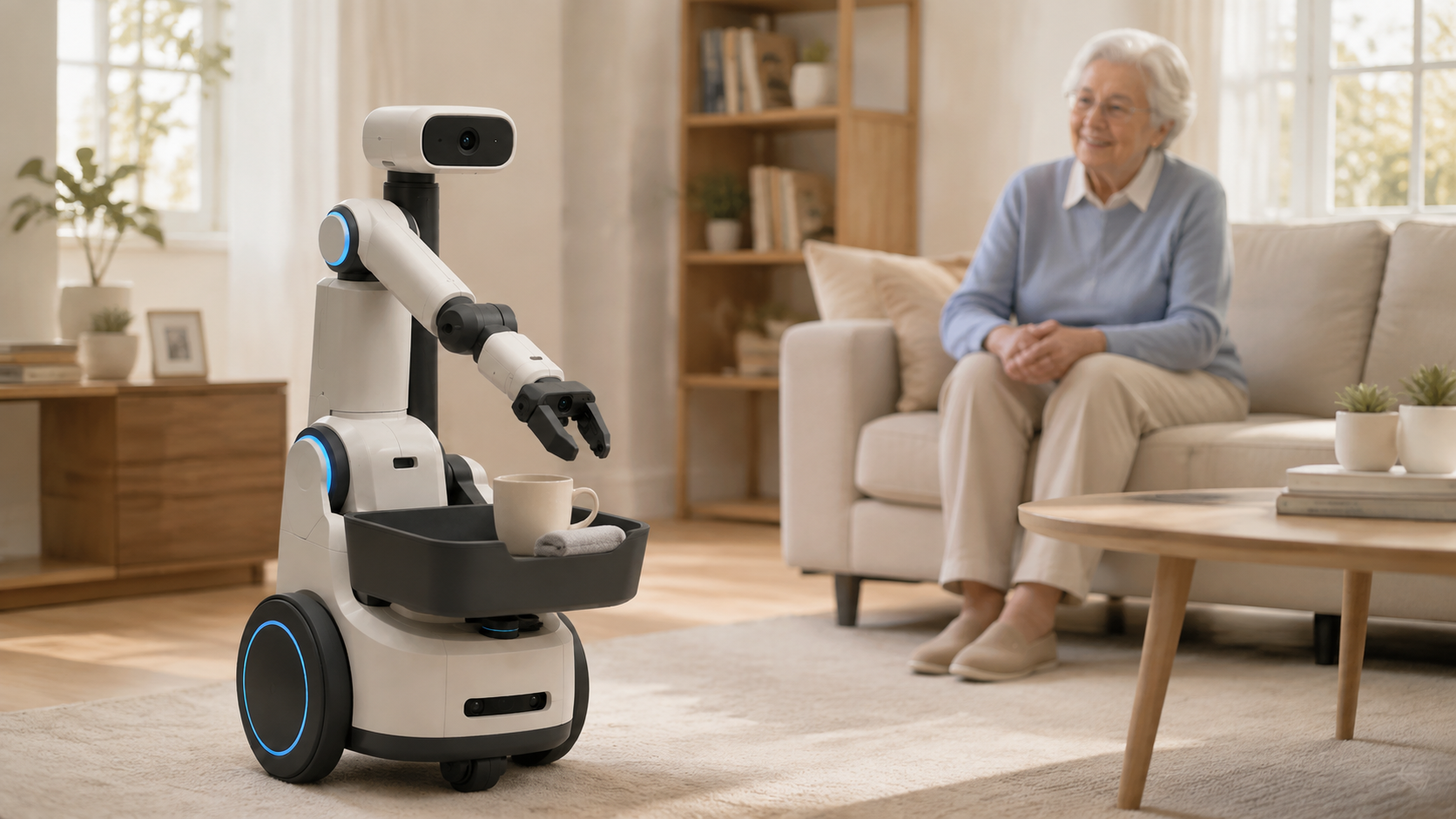
Our question
Can a small, affordable robot make independent living easier by reliably bringing everyday objects?
01 Frequency
Which small retrieval tasks happen often enough to matter?
02 Value
Which tasks genuinely improve day-to-day independence?
03 Trust
What makes a mobile robot feel predictable and comfortable in a home?
04 Reliability
How reliable must an interaction become before people choose to use it every day?
05 Affordability
Can useful physical assistance fit into a consumer-device price category?
Conceptual comparison — not a benchmark of specific commercial products.
FETCH is intentionally narrower. The point is not to win every category — it is to choose a task family that a compact, affordable machine might actually complete.
The difficult part of home robotics is not making a robot pick something up once. It is making the full interaction predictable enough to become boring.
Prototype demo
Repeatable task
Different rooms
Different lighting
Different object positions
Safe failure
Everyday trust
Metrics we intend to track
These are categories we plan to measure — not results we already have.
Did the requested object arrive?
When unsure, does FETCH stop and ask?
How often does a person need to step in?
Is the wait short enough to be useful?
Does the object stay in the tray?
Can a household get started without a technician?
Would someone ask FETCH tomorrow?
Participate
We would like to hear from people who live with these small daily trips — and from the families and professionals around them.
This is product research, not a purchase. There is no finished FETCH for sale yet.